
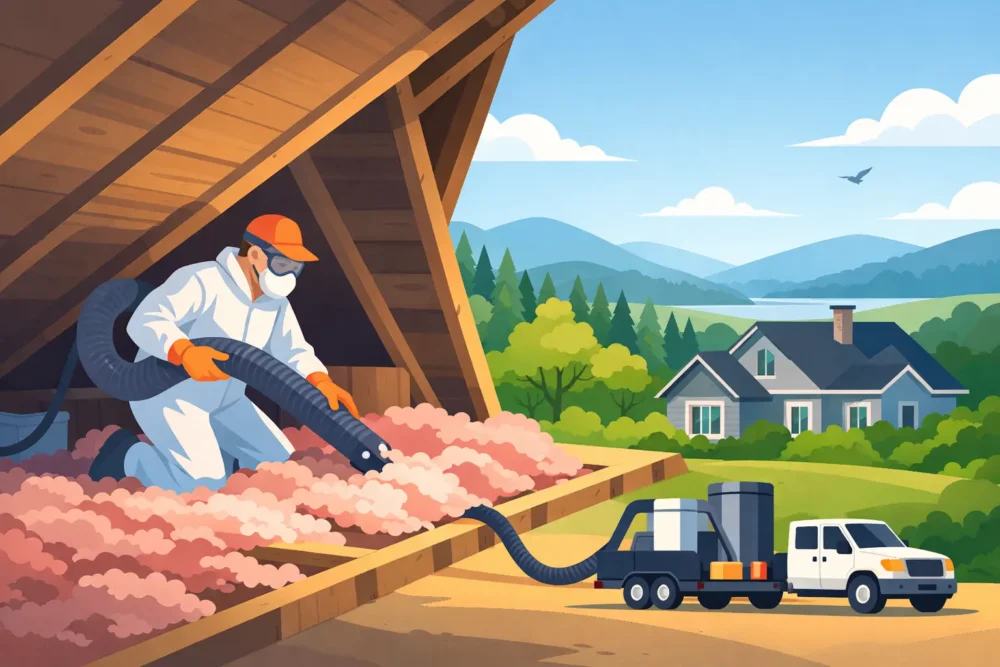
A drafty upstairs room, stubborn odors, or rising utility bills can all point to a problem hidden above the ceiling. Attic insulation removal in Wildwood, MO, is often the right first step when existing material is damaged, contaminated, wet, or no longer performing as it should. Removing old insulation is not simply a cleanup job. Done correctly, it gives homeowners a clear view of the attic so underlying air leaks, moisture concerns, and pest entry points can be addressed before new insulation goes in.
When Attic Insulation Needs to Come Out
Insulation does not always need to be removed just because it is old. Dry, clean insulation that has not shifted or lost coverage may still contribute to a comfortable, efficient home. However, age alone does not tell the whole story. The condition of the material and the attic beneath it matter much more.
Rodent activity is one of the most common reasons for removal. Mice, squirrels, and other pests can leave droppings, nesting material, urine, and damaged insulation throughout an attic. Besides creating unpleasant odors, contaminated insulation can affect indoor air quality and make it difficult to fully solve a pest issue. Simply placing fresh insulation over contaminated material can leave the source of the problem in the home.
Water exposure is another reason to act. A roof leak, plumbing issue, condensation, or poor attic ventilation can leave insulation damp. Wet fiberglass loses much of its insulating ability. Cellulose can clump, settle, and hold moisture against wood surfaces. If moisture has been present for an extended period, mold growth and wood deterioration may also need attention.
Removal may also make sense when insulation is badly compressed, unevenly distributed, or covered by renovation debris. Insulation works by slowing heat transfer through trapped air. When it is packed down, matted, or missing in key areas, the attic floor loses its protective thermal layer. That can make bedrooms below the attic harder to heat in winter and harder to cool during a Missouri summer.
Why Removal Is More Than Vacuuming Old Material
Professional attic insulation removal is a controlled process designed to protect the home while exposing the conditions that caused the insulation problem. Loose-fill insulation is commonly removed with specialized vacuum equipment and contained for disposal or recycling when the material is eligible. Batt insulation may need to be carefully bagged and removed by hand, especially where contamination or moisture is involved.
The value of removal is what happens after the attic is cleared. With the floor visible, a technician can inspect for open framing gaps, plumbing and wiring penetrations, disconnected ductwork, staining, animal entry points, and ventilation concerns. These details are frequently hidden under years of insulation.
Air sealing is especially important at this stage. Warm air can escape through small openings around top plates, light fixtures, pipe penetrations, attic hatches, and other gaps. In summer, hot attic air can also influence the rooms below. New insulation slows heat flow, but it cannot stop air that is actively leaking through openings. Sealing first helps the new insulation deliver better comfort and more dependable energy savings.
The Right Order of Work for a Lasting Result
The best attic projects follow the home’s actual conditions rather than a one-size-fits-all formula. For many homes, the work begins with an inspection to determine whether removal is necessary and whether moisture, pests, or air leakage are contributing to the problem.
If old material must come out, the next priority is correcting the cause. A roof leak should be repaired before insulation is replaced. Active rodent access should be closed off, and contaminated areas may require sanitation or disinfection. If ventilation is inadequate or blocked, that issue should be evaluated as part of the project. Adding insulation without correcting these conditions can lead to the same problems returning later.
Once the attic is clean and dry, air sealing can be completed. The recommended insulation type and R-value can then be selected based on the attic layout, existing construction, and performance goals. R-value measures resistance to heat flow. In plain terms, a higher R-value generally provides greater resistance to unwanted heat gain and heat loss, but the right amount depends on the home and the available attic space.
Some attics benefit from blown-in insulation because it fills around framing and irregular areas well. Others may be better suited for batts, specialty materials, or a combination of approaches. A radiant barrier may also be useful in certain attic assemblies, particularly when reducing radiant heat from a hot roof deck is a concern. It is not a replacement for proper insulation and air sealing, but it can be part of a customized plan.
What Wildwood Homeowners Should Watch For
Homes in Wildwood range from established properties to newer construction, and attic conditions can vary widely even within the same neighborhood. Mature trees, changing weather, roof details, additions, and aging ventilation components can all affect attic performance over time.
Pay attention if one level of the home feels noticeably warmer or colder than the rest. Other warning signs include insulation visible around attic access areas, musty smells, pest noises, ceiling discoloration, unexplained dust, or heating and cooling equipment that seems to run constantly. High bills are worth investigating too, though insulation is not always the only cause. Leaky ductwork, outdated HVAC equipment, windows, and crawl space conditions can also contribute.
An inspection helps separate assumptions from evidence. Thermal imaging can identify areas where temperature differences suggest missing insulation or air leakage. A visual attic assessment can reveal signs of settling, contamination, moisture, or ventilation trouble. This approach helps homeowners spend their improvement budget on the work that will make the most meaningful difference.
Why DIY Removal Can Create More Problems
Homeowners are often tempted to pull out a few damaged batts or scoop loose insulation into bags. Small, clean projects may be manageable, but full attic removal comes with real challenges. Attics can have exposed nails, limited walking surfaces, low clearance, electrical hazards, and decades of dust. Disturbing contaminated insulation without proper containment and protective equipment can spread particles into living areas.
There is also the disposal question. Wet, pest-affected, or mixed materials may need specific handling. A professional crew has the equipment to remove material efficiently, contain debris, and leave the work area ready for corrective repairs and new insulation. That is particularly valuable when the project also involves rodent proofing, air sealing, sanitation, ventilation improvements, or insulation replacement.
Choosing a Contractor for Attic Insulation Removal in Wildwood, MO
Look for a contractor that treats removal as part of a complete home-performance solution, not an isolated service. The right provider should explain what was found, identify likely causes, and provide a clear recommendation for the next steps. A detailed estimate should distinguish removal, disposal, air sealing, sanitation, repairs, and new insulation so you understand the scope of the work.
It also helps to work with licensed and insured technicians who can handle the attic safely and communicate plainly about the condition of the home. Better Home Insulation provides inspection-led recommendations, helping homeowners address old or contaminated insulation along with the hidden issues that may have caused it. Eligible removed materials may be recycled, and every project is backed by a 100% satisfaction guarantee.
A clean attic is an opportunity to improve more than insulation. It is a chance to remove damaged material, close the gaps that waste energy, and give your home a healthier, more comfortable foundation for the seasons ahead.