
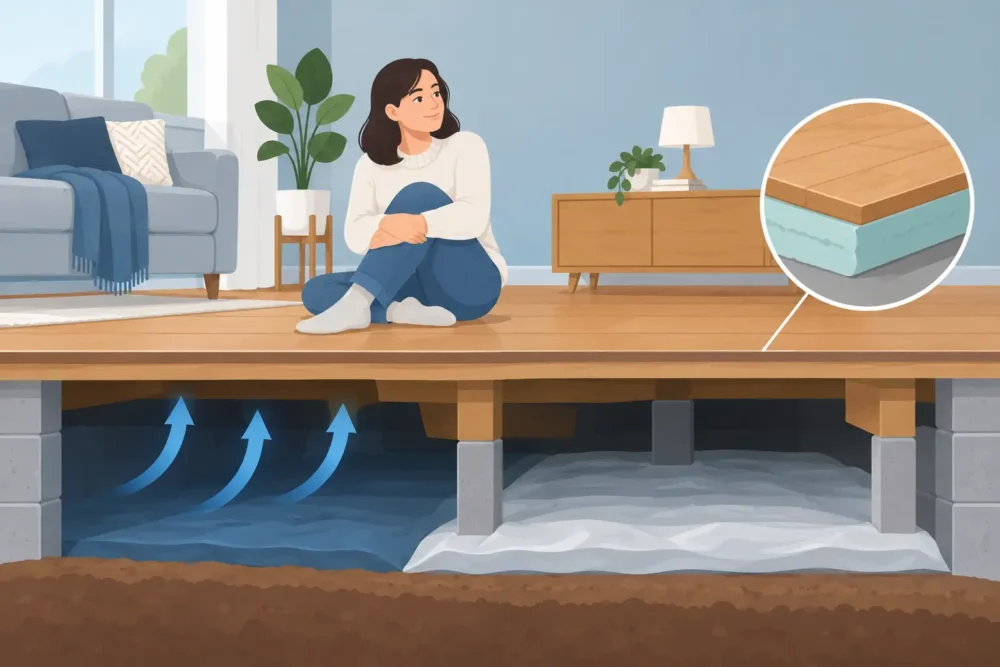
A cold floor is more than a minor winter annoyance. When the rooms over your crawl space feel chilly, the problem can make the entire home less comfortable, encourage you to raise the thermostat, and add to heating costs. This guide to fixing cold floors above crawl spaces explains what is usually happening below your feet and how to correct it without trapping moisture or covering up a larger issue.
Why Floors Above Crawl Spaces Feel Cold
The floor system between your living space and a crawl space is part of your home’s thermal boundary. When insulation is missing, sagging, damaged, or poorly installed, heat moves out through the floor. In a vented crawl space, cold outside air can make that heat loss even more noticeable.
Air leakage matters just as much. Gaps around plumbing pipes, wiring penetrations, duct openings, the rim joist, and access doors allow cold air to reach the underside of the floor. Even a well-insulated floor can feel cold if air is moving through or around the insulation.
Moisture often makes the situation worse. Damp fiberglass insulation loses effectiveness, wood framing can absorb moisture, and a bare dirt crawl space can release water vapor into the area year-round. In St. Louis-area homes, shifting seasons and humid summers create conditions where a simple insulation-only fix may not be enough.
Before choosing a remedy, look for a few telling signs: cold spots near exterior walls, floors that are noticeably colder than the room air, a musty smell, high utility bills, or insulation hanging between floor joists. These symptoms can overlap, which is why the crawl space should be inspected as a complete system rather than treated as an insulation problem alone.
A Guide to Fixing Cold Floors Above Crawl Spaces: Start With the Cause
The right repair depends on the condition of the crawl space and whether it is vented or enclosed. A professional inspection should identify where heat is escaping, whether moisture is present, and whether rodents, mold-like growth, damaged ductwork, or contaminated insulation are contributing to the problem.
Thermal imaging can help locate unusually cold areas in the floor and wall system. It does not replace a physical inspection, but it can reveal patterns that are difficult to see from inside the house. For example, a broad cold area may point to missing insulation, while a narrow cold line around the perimeter may indicate rim-joist air leakage.
Check the crawl space for standing water, damp soil, torn vapor barrier material, plumbing leaks, disconnected ducts, and pest activity. If insulation has been used as nesting material or has been exposed to moisture or animal waste, installing new material over it is not a lasting solution. Removal, cleanup, and correction of the entry points may be needed first.
Air Seal Before Adding Insulation
Insulation slows heat transfer. Air sealing stops moving air from carrying heat away. Both are necessary for a warmer floor.
The most common air-leak locations include the rim joist, where the house framing rests on the foundation; gaps where pipes and wiring pass through the subfloor; openings around ducts; and poorly sealed crawl space access doors. Sealing these areas helps prevent cold outdoor air from washing over the insulation and entering the home through small gaps in the floor assembly.
This step requires judgment. Some materials are appropriate for small penetrations, while larger gaps and rim-joist areas may need a different sealing approach. Combustion appliances, electrical components, and required clearances need special care. A contractor should also avoid sealing ventilation details blindly, since the best approach changes depending on whether the crawl space will remain vented or be converted to a controlled space.
Choose the Right Insulation Strategy
For a traditional vented crawl space, insulation is commonly installed against the underside of the floor between the joists. The material must be in full contact with the subfloor, fit correctly around obstructions, and be supported securely. Gaps, compression, and loose batts reduce performance.
Fiberglass or mineral wool batts can work well when the crawl space is dry, properly detailed, and accessible. Mineral wool has strong moisture resistance, while fiberglass can be a cost-effective option when installed carefully. Neither material solves air leaks on its own, and both can perform poorly if exposed to chronic moisture or rodents.
Spray foam insulation can combine insulation and air sealing in targeted areas, particularly at rim joists and complicated penetrations. It may be a useful choice where batts would be difficult to fit, though it typically costs more and should be applied only after moisture concerns are addressed. The goal is not to select the most expensive material. It is to build an assembly that fits your home’s conditions and delivers reliable comfort.
In some homes, enclosing and conditioning the crawl space is the better long-term path. This approach generally involves controlling ground moisture with a durable vapor barrier, sealing uncontrolled outside-air openings when appropriate, insulating foundation walls rather than the floor above, and providing a planned method of moisture control. It can improve comfort, protect ducts and plumbing, and reduce damp conditions, but it requires careful design. A partially enclosed crawl space can create worse moisture problems than either a properly vented or properly conditioned one.
Control Ground Moisture and Water Entry
A vapor barrier over exposed soil is one of the most practical ways to reduce moisture entering a crawl space. The material should cover the ground thoroughly, with seams and edges properly secured. Thin, loosely laid plastic may offer limited help but is easily damaged during service work and may not hold up over time.
Water management outside the home matters too. Gutters should direct water away from the foundation, downspouts should discharge well away from the crawl space perimeter, and grading should slope away from the house. If there is recurring standing water, the crawl space may need drainage improvements or a sump solution before insulation work begins.
Do not assume that opening vents will dry every crawl space. In humid weather, outdoor air can bring in moisture that condenses on cooler surfaces below the house. The correct ventilation or encapsulation plan depends on local climate, foundation conditions, existing mechanical systems, and moisture readings.
Do Not Overlook Ducts, Plumbing, and Pests
Leaky or uninsulated ducts in a crawl space can waste energy while making the floor above feel uncomfortable. A return-air duct leak can also pull musty crawl space air toward the HVAC system. Duct sealing and insulation may be part of the answer, especially if the crawl space houses major mechanical runs.
Cold crawl spaces also increase the risk of frozen or sweating pipes. Insulating pipes helps, but it should not replace correcting the overall air and moisture conditions around them.
Rodents are another frequent reason floor insulation fails. They can tunnel through batts, leave contamination behind, and re-enter through gaps in the foundation or utility penetrations. If pest evidence is present, rodent proofing and sanitation should be completed before new insulation is installed. Otherwise, fresh insulation can quickly become another nesting site.
When Professional Help Is Worth It
Some homeowners can identify an obvious missing insulation section, but crawl space repairs often involve tight access, electrical wiring, moisture, pest contamination, and building-science decisions that are difficult to assess from above. Professional help is especially valuable when you notice dampness, mold-like staining, recurring pests, sagging insulation, high indoor humidity, or rooms that remain cold after a basic repair.
A complete inspection can clarify whether your home needs targeted air sealing and floor insulation, vapor barrier installation, insulation removal, crawl space encapsulation, duct improvements, or a combination of services. Better Home Insulation provides inspection-led recommendations so homeowners can address the source of the problem instead of paying for a temporary patch.
A warmer floor should feel like a normal part of living in your home, not something you notice only when winter arrives. Solving the issue at the crawl space can improve comfort, reduce wasted energy, and help keep the home below your feet cleaner, drier, and easier to maintain.