
That sharp urine smell in the attic, the dark staining around old insulation, or the dust drifting from a crawl space usually means the problem is bigger than insulation alone. If you are wondering how to remove contaminated insulation, the real goal is not just getting old material out. It is removing a source of odor, airborne particles, moisture damage, and energy loss without spreading contamination through the house.
Contaminated insulation can come from rodent activity, water intrusion, mold growth, pest nesting, or years of debris and airborne pollutants settling into the material. In many homes, especially older ones, the insulation has also shifted, compressed, or become ineffective long before the contamination is obvious. Once that happens, removal is often the right next step.
When insulation needs to be removed
Insulation does not need to be replaced just because it is old. If it is dry, intact, and performing well, it may still be doing its job. The issue is contamination. Once insulation has absorbed urine, droppings, moisture, or organic growth, it can stop functioning as a clean thermal barrier and start acting like a reservoir for odor and irritants.
Attics and crawl spaces are the most common trouble spots. Rodents often tunnel through blown-in insulation, leaving waste behind and flattening the material as they move. A roof leak can soak insulation in one section of the attic while the rest looks normal from a distance. Crawl spaces can hold damp fiberglass or fallen batt insulation for months before a homeowner notices musty smells or cold floors.
The signs are usually practical, not mysterious. You may notice uneven temperatures, rising heating and cooling bills, musty or sour odors, visible droppings, insect activity, or staining on insulation and framing. If anyone in the home is sensitive to dust, allergens, or mold, contaminated insulation can also make indoor air quality feel noticeably worse.
How to remove contaminated insulation without making the mess worse
This is where many homeowners underestimate the job. Knowing how to remove contaminated insulation is partly about labor, but mostly about containment and cleanup. Pulling out damaged insulation without the right process can stir contaminants into the air, spread debris into living areas, and leave behind the very material that caused the problem.
Start with the source, not the insulation
Before removal begins, the cause of contamination needs to be identified. If rodents got in, entry points should be found and sealed. If moisture caused the damage, the roof leak, plumbing issue, or crawl space humidity problem has to be corrected. If that step gets skipped, new insulation can end up contaminated all over again.
A proper inspection also helps determine how much material needs to come out. Sometimes the damage is isolated to one area. In other homes, contamination is widespread and full removal is the smarter option. This is especially common when loose-fill attic insulation has been exposed to rodent activity across multiple sections.
Use protective equipment and controlled removal methods
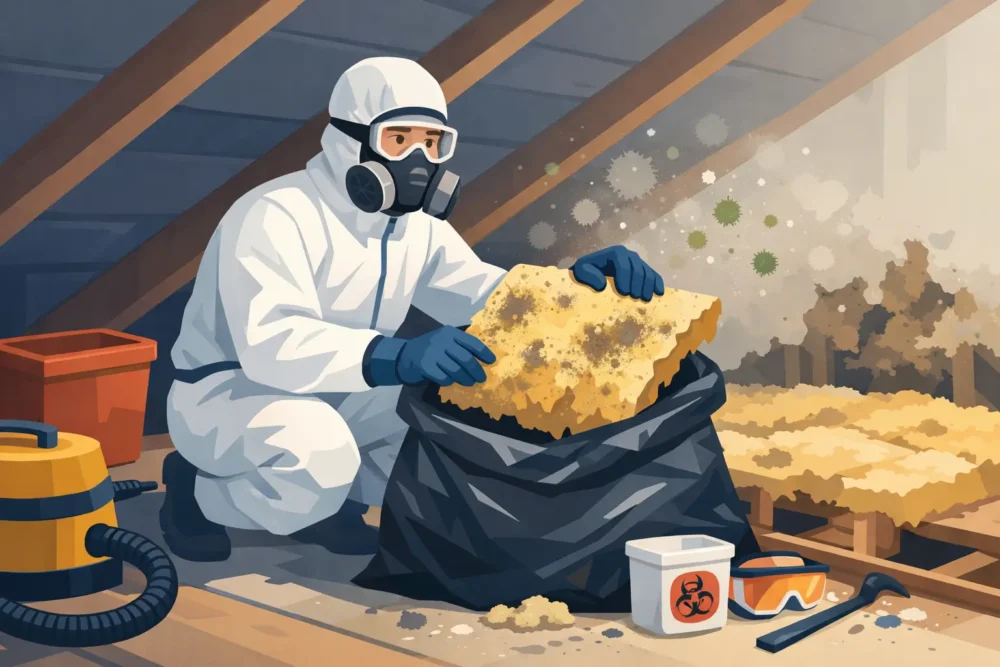
Contaminated insulation should be treated like a material that can release harmful particles. That means using proper respiratory protection, gloves, disposable coveralls, and eye protection. Standard dust masks are often not enough for heavy contamination, especially where droppings, nesting material, or mold may be present.
Removal methods depend on the insulation type. Blown-in insulation is typically removed with commercial vacuum equipment designed to capture the material directly into sealed collection bags. Batt insulation often has to be pulled by hand, bagged carefully, and removed without dragging it through clean areas of the home.
This is one reason professional removal usually makes sense. The equipment matters, but the process matters more. Access points need to be protected, debris pathways controlled, and the work area isolated as much as possible. In a finished home, that can make the difference between a contained project and a cleanup problem that reaches far beyond the attic or crawl space.
Sanitize the exposed area after removal
Once the insulation is out, the framing, attic floor, or crawl space surfaces should be inspected and cleaned as needed. If there is rodent contamination, leftover droppings and residue cannot be ignored. If there has been moisture, wood surfaces may need treatment and further evaluation for damage.
This step is where insulation removal becomes home remediation, not just disposal. The empty cavity or attic floor gives technicians a chance to see hidden issues clearly – air leaks around penetrations, disconnected ductwork, rusted vents, damp wood, or signs of ongoing pest intrusion. Those are the kinds of problems that keep comfort and energy performance from improving, even after new insulation is installed.
Why DIY removal is not always the money-saving choice
Homeowners often ask whether they can handle the work themselves. The honest answer is that it depends on the type and extent of contamination.
If a small, clearly isolated section of fiberglass batts was affected by a minor leak that has already been repaired, a careful DIY approach may be possible. But when contamination involves rodent waste, strong odors, mold concerns, or large volumes of loose-fill material, the risk goes up quickly. Exposure, disposal, and cleanup become harder to manage than most people expect.
There is also the question of what happens next. If removal is done without air sealing, sanitation, and proper replacement, the home may still feel drafty, dusty, or uncomfortable. A lower upfront cost can turn into a higher total cost when the problem has to be corrected a second time.
What happens after contaminated insulation is removed
Removal is only half the job. The real improvement comes from restoring the space correctly.
Air sealing before new insulation
Many attics and crawl spaces leak air around wiring penetrations, plumbing openings, top plates, recessed fixtures, and access hatches. If new insulation is installed over those leaks, conditioned air still escapes and outside air still enters. That means comfort problems and utility waste continue.
Air sealing before reinsulating helps the new material perform the way it should. It also reduces the movement of air that can carry odors, dust, and humidity into the living space.
Replacing insulation with the right material and depth
Not every home needs the same insulation strategy. Some attics benefit from blown-in insulation that creates more even coverage. Some crawl spaces need removal, air sealing, vapor barrier work, and new insulation together. In moisture-prone areas, choosing the wrong material can create future problems.
The right replacement plan depends on the home structure, ventilation conditions, and what caused the contamination in the first place. That is why inspection-led recommendations are more valuable than a one-size-fits-all quote.
Addressing pests, moisture, and ventilation together
This is where a full-service approach helps homeowners the most. If insulation was contaminated by rodents, sealing entry points matters just as much as reinstalling insulation. If dampness caused the issue, vapor control and ventilation may need attention. If the attic has heat buildup or poor airflow, insulation alone may not solve the comfort problem.
A home works as a system. Contaminated insulation is often the symptom homeowners notice, while the real cause sits in air leakage, moisture movement, or pest access.
When to call a professional insulation removal company
If the contamination covers a large area, involves droppings or nesting, includes mold concerns, or has created persistent odors, professional help is usually the safest path. The same goes for homes where multiple issues overlap, such as rodent damage plus air leakage plus old underperforming insulation.
A qualified contractor should be able to inspect the affected area, explain what caused the problem, remove and dispose of damaged material properly, clean or sanitize when needed, and recommend the right next steps for insulation, sealing, and prevention. Licensed and insured service matters here because the work affects cleanliness, energy efficiency, and the condition of the home itself.
For homeowners in the St. Louis area, this kind of work is especially common after seasonal humidity swings, roof leaks, and rodent activity in attics and crawl spaces. In those cases, a free inspection can give you a clear picture of whether the issue is limited or part of a larger home performance problem.
If you are trying to figure out how to remove contaminated insulation, the safest answer is also the most practical one: remove the damaged material carefully, correct the cause, clean the area thoroughly, and rebuild the space so your home is healthier, more comfortable, and easier to heat and cool. That is how the problem actually gets solved.