
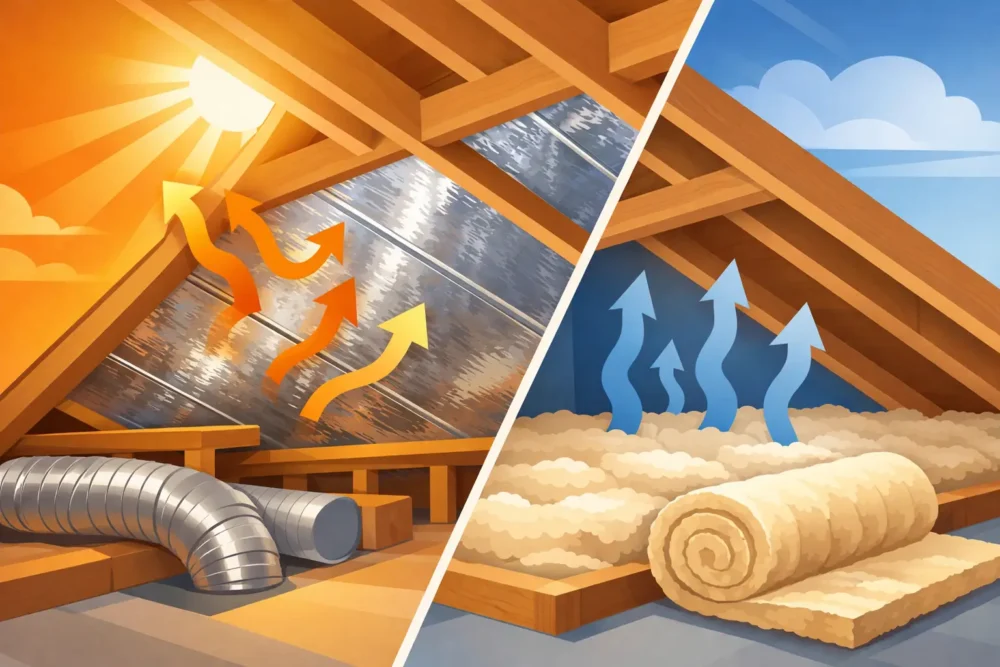
A hot upstairs bedroom in July and an expensive cooling bill often lead homeowners to the same question: radiant barrier vs insulation – which one will actually make a difference? The answer is usually not choosing one material over the other. They address different types of heat transfer, and the best solution depends on your attic’s current condition, air leaks, insulation level, ventilation, and the way your home is built.
For homes in St. Louis and surrounding Missouri communities, a properly evaluated attic can improve year-round comfort. Insulation is the primary thermal defense for most homes. A radiant barrier can be a valuable addition when heat from a sun-baked roof is a major contributor to attic temperatures.
Radiant Barrier vs Insulation: The Core Difference
Insulation slows conductive heat flow. In simple terms, it resists heat moving through the ceiling between your living space and the attic. During winter, it helps retain indoor heat. During summer, it reduces the amount of attic heat that reaches the rooms below.
Its performance is measured by R-value. The higher the R-value, the greater the material’s resistance to heat flow. Fiberglass, cellulose, mineral wool, and foam insulation can all contribute meaningful R-value when installed at the right depth and without gaps, compression, or moisture damage.
A radiant barrier works differently. It is a reflective material, often aluminum-faced, designed to reduce radiant heat transfer. When the sun heats roof shingles and roof decking, that heat radiates into the attic. A properly installed radiant barrier reflects a portion of that radiant energy away rather than allowing it to heat attic surfaces and equipment.
Radiant barrier is not a replacement for attic insulation. It does not provide the same R-value, does not seal air leaks, and should not be expected to solve cold rooms, major drafts, or inadequate insulation coverage on its own.
What Insulation Does Best
For most homeowners, improving attic insulation provides the larger and more dependable comfort benefit. Heat naturally moves from warm areas toward cooler areas. In winter, heat from your conditioned rooms tries to escape upward into a cold attic. In summer, an extremely hot attic can push heat down toward the home.
Adequate insulation slows both processes. It also helps your HVAC system run more predictably, because rooms hold their set temperature longer and experience fewer sharp swings.
Insulation is particularly valuable when an attic has thin, uneven, settled, damaged, or contaminated material. Older homes may have insulation that looks acceptable from a distance but has low effective R-value because it is compressed around framing, missing near the eaves, or disrupted by past electrical and plumbing work.
Before adding material, the attic should be inspected for conditions that reduce performance. Common issues include open penetrations around pipes and wiring, unsealed attic hatches, disconnected ductwork, bath fans venting into the attic, roof leaks, rodent activity, and moisture-damaged insulation. Adding new insulation over these problems can hide them without correcting the cause.
Air sealing comes first
Insulation slows heat. Air sealing stops uncontrolled air movement. These are related but separate jobs.
Warm indoor air can rise through small openings in the ceiling plane during winter, carrying heat and moisture into the attic. In summer, attic air and outdoor air can enter through gaps and make rooms harder to cool. Sealing accessible gaps before insulating helps the new insulation perform closer to its intended R-value and can reduce moisture concerns.
This is why an attic improvement plan often includes air sealing, insulation correction, and ventilation review rather than one standalone service.
When a Radiant Barrier Makes Sense
A radiant barrier is most useful when the attic receives substantial solar heat and the material is installed with the required air space facing it. It is commonly applied to the underside of roof decking or incorporated into certain attic assemblies. The reflective surface needs to remain exposed to an air space to reflect radiant heat effectively.
In a hot attic, radiant barrier can lower the temperature of surfaces below the roof and reduce the heat load placed on ductwork or air-handling equipment located in the attic. That can be especially helpful when second-floor rooms struggle on sunny afternoons despite a functioning air conditioner.
It may also make sense during a reroofing project or as part of a broader attic upgrade. If ductwork is in the attic, reducing radiant heat exposure can support better cooling performance. Still, leaky or poorly insulated ducts should be repaired and sealed rather than relying on a radiant barrier to compensate for them.
In Missouri’s mixed climate, the benefits are typically most noticeable during the cooling season. A radiant barrier may contribute to comfort and cooling efficiency, but it will not offer the same broad winter benefit as adequate attic insulation and air sealing. That trade-off matters when deciding where to invest first.
Situations Where Insulation Should Be the Priority
If your attic is underinsulated, insulation should almost always come before a radiant barrier. A reflective roof surface cannot make up for a ceiling with insufficient R-value.
The same is true if your home has obvious air leakage, wet insulation, rodent-contaminated material, or signs of attic moisture. These are performance and health-related concerns that need direct remediation. In some cases, insulation removal and disposal is the right first step so the attic can be cleaned, sanitized when necessary, sealed, and rebuilt with clean, properly installed material.
Homeowners should also be cautious about placing radiant materials directly over attic-floor insulation without understanding the assembly. Dust accumulation, improper orientation, and lack of an air gap can reduce effectiveness. Installation details matter as much as the product itself.
The Best Answer Is Often Both
The strongest attic systems use each material for the job it does best. Air sealing limits unwanted airflow through the ceiling plane. Insulation provides R-value and slows heat flow all year. A radiant barrier reduces solar-driven radiant heat in the attic. Balanced ventilation helps manage heat and moisture when the roof and soffit design can support it.
That combination is not necessary in every home. A shaded home with a well-insulated, well-sealed attic may gain little from a radiant barrier. Conversely, a home with a dark roof, intense afternoon sun, attic ductwork, and persistent second-floor heat may be a strong candidate after its insulation and air leaks are addressed.
A professional inspection can identify which condition is actually causing the problem. Thermal imaging, visual attic evaluation, and a review of insulation depth can reveal whether heat is entering through the roof, bypassing insulation through air leaks, traveling through duct losses, or affecting rooms because of a different issue altogether.
How to Decide What Your Home Needs
Start with the symptoms, but do not assume the first product you hear about is the solution. High utility bills, a hot second floor, uneven room temperatures, ice dams, cold ceilings, musty attic odors, and visible pest damage can point to very different underlying problems.
Ask for an inspection that considers the full attic system. The evaluation should look at existing insulation depth and condition, air leaks, moisture evidence, ventilation pathways, roof-deck conditions, ductwork, and signs of rodent intrusion. A clear recommendation should explain what is urgent, what will provide the biggest benefit, and what is optional.
At Better Home Insulation, we take that whole-home approach because comfort problems rarely come from one factor alone. Our licensed and insured team can help homeowners determine whether they need attic air sealing, insulation removal, new insulation, radiant barrier work, ventilation improvements, or a practical combination of services.
If your attic is making your home harder to heat or cool, a free inspection and estimate can replace guesswork with a plan built around your home’s actual condition. The right upgrade should leave you with cleaner attic conditions, steadier indoor temperatures, and an HVAC system that does not have to work as hard every day.