
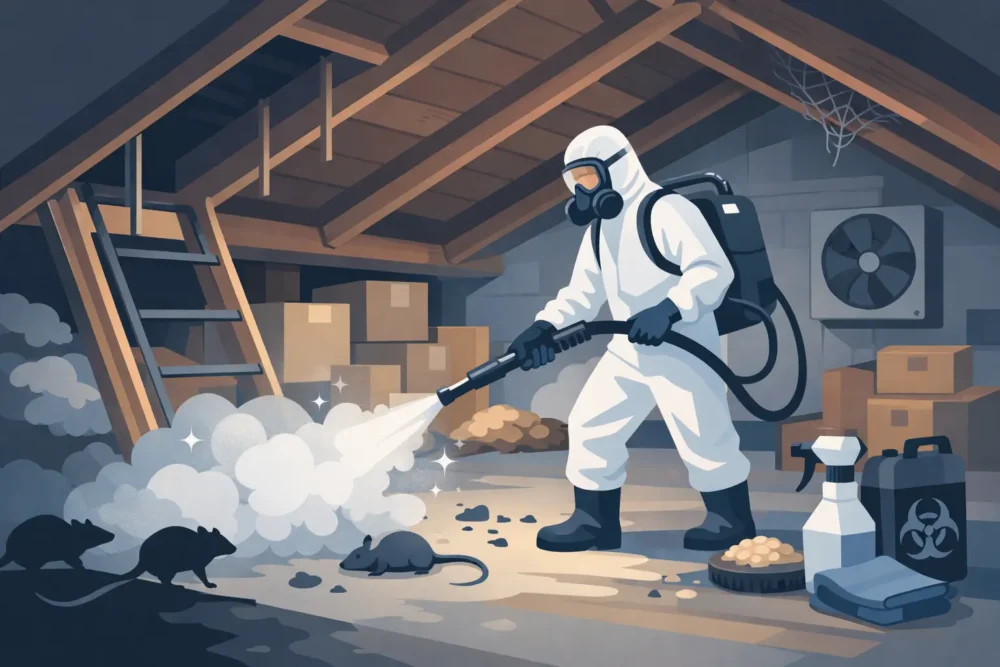
Rodent droppings in an attic are more than an unpleasant discovery. They can contaminate insulation, leave persistent odors, damage wiring, and create gaps that make a home harder and more expensive to heat and cool. Sanitizing attic after rodent infestation means addressing the contamination, the damaged materials, and the entry points that allowed rodents inside in the first place.
A proper cleanup is not simply spraying a deodorizer over the area. The goal is to restore a cleaner, healthier attic while protecting the insulation system that helps keep conditioned air inside your home. For many homeowners, that requires a careful inspection before anyone starts removing material.
Start With Safety and a Clear Assessment
Before entering a rodent-affected attic, avoid disturbing droppings, nests, or loose insulation. Sweeping or vacuuming dry droppings can send contaminated dust into the air. Homeowners should also avoid running an ordinary household vacuum in the attic, since it is not designed to safely contain fine particles from contaminated materials.
A qualified assessment should identify the extent of the issue. Light activity in one small, accessible corner may allow for targeted cleaning and minor insulation repair. Widespread droppings, urine staining, nesting, dead rodents, or strong odor usually point to a larger remediation project. The same is true when insulation has been tunneled through, compressed, or soaked with urine.
The inspection should also look beyond the mess itself. Rodents often enter through roofline gaps, plumbing penetrations, open vents, damaged soffits, or utility openings. If those pathways remain open, a freshly cleaned attic can be reinfested within weeks.
Why Rodent-Contaminated Insulation Often Needs Removal
Insulation works by trapping pockets of air. When rodents nest in it, mat it down, or contaminate it with droppings and urine, its performance can decline. Even if an attic still appears well insulated from a distance, damaged areas may allow more heat loss in winter and heat gain in summer.
Whether insulation should be removed depends on the material and the level of contamination. A small amount of droppings on a limited area of durable insulation may be treated with controlled cleaning if the material is otherwise dry and intact. Loose-fill insulation with widespread contamination is often more difficult to clean thoroughly because droppings and urine can be scattered throughout the material. In that situation, removal and replacement are usually the more dependable option.
There is also an odor consideration. Urine can remain in insulation and on wood surfaces long after the rodents are gone. Warmer weather can make those odors more noticeable, especially in bedrooms below the attic. Removing contaminated insulation gives the cleanup process a clean starting point and makes it easier to inspect framing, ductwork, and air leaks.
The Right Process for Sanitizing an Attic After Rodents
Professional attic sanitation follows a sequence. Skipping steps can leave behind contamination or solve only the visible portion of the problem.
1. Confirm the Rodents Are Gone
Sanitation should not begin until active rodent activity has been addressed. Fresh droppings, scratching noises, chew marks, and new nesting material may indicate the problem is ongoing. Rodent proofing should focus on closing access points with durable materials suited to the opening and location. Trapping or other pest-control measures may also be needed before exclusion work is complete.
This order matters. Sealing an opening while rodents are still inside can create odor issues or send them into other areas of the home. A thoughtful plan accounts for both removal and prevention.
2. Contain and Remove Contaminated Materials
When insulation removal is necessary, technicians should use controlled methods to limit the movement of dust and debris through the home. Contaminated insulation is collected for proper disposal, while eligible clean materials may be handled through appropriate recycling channels.
During removal, the attic floor and framing become visible. This is a valuable opportunity to identify rodent tunnels, hidden droppings, damaged vent connections, exposed wiring, and air leaks around top plates, plumbing stacks, recessed lights, and chases. These details affect both sanitation and energy performance.
3. Clean and Disinfect Hard Surfaces
Droppings and nesting debris should be treated with an appropriate disinfecting solution before removal so they are not stirred into the air. After the material is carefully collected, accessible hard surfaces can be cleaned and disinfected according to the product directions and the level of contamination.
Disinfection is useful, but it is not a substitute for removing heavily soiled porous materials. Wood framing may be cleaned when contamination is limited. Insulation, cardboard, fabric, and other absorbent materials often cannot be restored to a sanitary condition if they are heavily affected.
4. Address Odors and Moisture Conditions
Persistent odor is often a sign that urine reached insulation, wood, or debris in hard-to-reach areas. Deodorizing products can help in some cases, but they should not be used to mask an unresolved contamination issue. The source must be removed or properly treated first.
The attic should also be checked for moisture. Rodents can damage flexible ducts or disturb bathroom exhaust connections, and poor ventilation can intensify odor and create conditions that affect insulation. Correcting ventilation or moisture problems protects the work completed during remediation.
5. Air Seal Before Reinsulating
After sanitation, air sealing is one of the most valuable next steps. Small gaps between the attic and living space allow conditioned air to escape and can pull attic air, dust, and odors toward rooms below. Sealing those openings helps improve comfort and supports better heating and cooling efficiency.
Air sealing must be done carefully around heat-producing fixtures, chimneys, and venting systems. This is not a place for generic foam or guesswork. The correct materials and clearances depend on what is present in the attic.
6. Install Replacement Insulation to the Right Level
Once the attic is clean, dry, sealed, and rodent-proofed, replacement insulation can restore the home’s thermal barrier. The appropriate R-value depends on the existing assembly, the amount of usable attic space, and local climate recommendations. The goal is even coverage without blocking attic ventilation or burying critical access points.
For St. Louis-area homes, this step can make a noticeable difference during humid summers and cold winter stretches. Reinsulating after contamination is not just a cleanup expense. When the work includes air sealing and proper installation, it can also correct energy waste that was already affecting utility bills.
When Homeowners Should Call a Professional
A small amount of old rodent evidence may be manageable for an experienced homeowner who can safely access the attic and follow appropriate cleaning precautions. The situation changes when contamination is widespread, insulation is visibly damaged, odor is persistent, or there are signs of chewed electrical wiring.
Professional help is especially worthwhile when the attic needs multiple services at once: insulation removal, sanitation, rodent proofing, air sealing, ventilation review, and new insulation. Coordinating those steps through one provider reduces the risk of one contractor covering up a problem another contractor should have addressed.
Better Home Insulation approaches rodent-damaged attics as a whole-home performance issue. A detailed inspection can clarify what needs to be cleaned, what needs to be removed, where rodents entered, and how the attic can be rebuilt to support healthier indoor conditions and lower energy loss.
Do Not Treat Cleanup as the Last Step
The best result comes from treating sanitation as part of a complete repair plan, not as an isolated task. Cleaning without exclusion leaves the door open to another infestation. Replacing insulation without air sealing can leave comfort and efficiency problems in place. Sealing an attic without checking ventilation can create a different moisture concern.
A clean attic should also be a dry, well-insulated, properly sealed attic with rodent entry points corrected. If you are unsure how extensive the damage is, a professional inspection and clear estimate can give you a practical path forward before contamination becomes a larger health, comfort, or repair issue.