
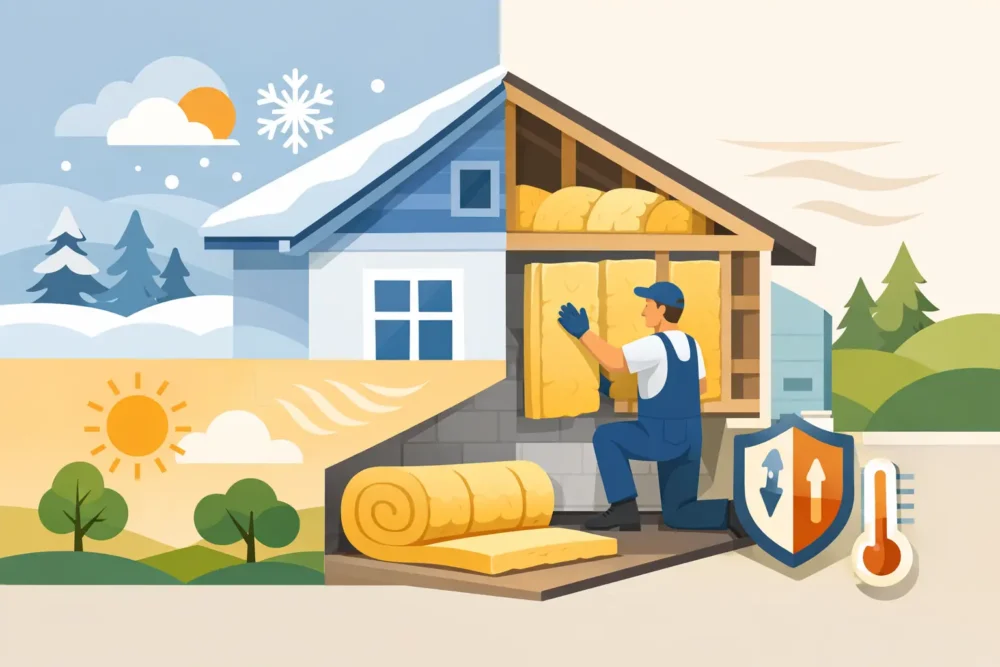
A room that never feels comfortable, a second floor that overheats in summer, and heating bills that keep climbing often point to the same issue: the home envelope is not doing its job. This home insulation upgrade guide explains how to find the real source of energy loss and choose improvements that make a noticeable difference without paying for work your home does not need.
Insulation is not simply material placed in an attic or wall. It is part of a complete system that includes air sealing, moisture control, ventilation, and sometimes cleanup after pests or damaged insulation. When those pieces work together, your home holds conditioned air longer, indoor temperatures stay more even, and your HVAC equipment does not have to work as hard.
Start With the Problem, Not the Product
It is tempting to begin by asking which insulation has the highest R-value. R-value measures resistance to heat flow, so it matters, but it is only one part of the decision. A high-R-value material installed over major air leaks can still leave you with drafts, hot spots, and disappointing utility bills.
The better first question is: where is the home losing energy, air, or moisture? An attic inspection, crawl space inspection, and thermal imaging assessment can reveal issues that are difficult to see from inside the living area. For example, dark or compressed attic insulation may indicate age or moisture exposure, while gaps around wiring, plumbing, recessed lights, and framing can allow substantial air movement through the ceiling plane.
A professional inspection should also consider whether existing insulation is safe to keep. Rodent contamination, mold concerns, water damage, or heavily compacted material may call for removal and disposal before new insulation is installed. Adding fresh material on top of contaminated insulation can conceal the problem rather than correct it.
Signs Your Home May Need an Insulation Upgrade
Some insulation problems are obvious, but many show up in day-to-day comfort and maintenance concerns. Pay attention if you notice several of these conditions:
- Rooms that are consistently hotter, colder, or draftier than the rest of the house
- High heating and cooling bills without a clear change in energy use
- Attic insulation that is thin, uneven, damp, visibly dirty, or compressed
- Musty odors, condensation, pest activity, or moisture in the crawl space
- HVAC equipment that runs frequently yet struggles to maintain the thermostat setting
These signs do not always mean the same repair is needed. A cold bedroom may be caused by inadequate attic coverage, an unsealed attic hatch, leaky ductwork, missing wall insulation, or air entering from a crawl space. That is why a customized recommendation is more valuable than a one-size-fits-all insulation quote.
Home Insulation Upgrade Guide: Prioritize Air Sealing First
Air sealing is often the most practical place to begin, especially in older homes. Warm indoor air naturally rises during the heating season. If the attic floor has openings, that air escapes into the attic and draws colder outside air into lower areas of the home. In summer, hot attic air and humid outdoor air can enter through the same weak points.
Common attic leakage areas include plumbing stacks, electrical penetrations, open soffits, top plates, duct chases, attic hatches, and gaps around exhaust fan housings. Proper attic air sealing closes these pathways before insulation is added or leveled. The result is not only better energy performance but also fewer drafts and less chance of moisture-laden indoor air reaching cold attic surfaces.
Air sealing must be done carefully. Some openings require heat-resistant materials or clearances around fixtures and venting components. Blocking required ventilation paths can create moisture problems, so this is work where experience matters. A qualified technician can distinguish between a leak that should be sealed and an opening that must remain clear for safe operation.
Choose Insulation Based on the Space
The right insulation depends on the area being treated, the home’s construction, access conditions, moisture risk, and the desired R-value. There is no single best material for every project.
Attic insulation
Attics are commonly the most cost-effective place to improve insulation because heat transfer through the ceiling can affect the entire home. Blown-in insulation can provide even coverage around framing and existing obstacles, making it a strong option when an attic needs additional depth. Batt insulation can work well in accessible, regularly spaced cavities, but it must fit snugly without gaps or compression to perform as intended.
If the attic contains damaged, contaminated, or severely outdated insulation, removal may be the sensible first step. Clean removal also gives technicians access to hidden air leaks, rodent entry points, and areas of moisture damage that would otherwise remain buried.
Crawl space insulation and vapor barriers
A crawl space can affect floors, indoor humidity, odors, and the condition of wood framing. Insulation alone may not solve the issue if damp ground conditions or outdoor air are contributing moisture. In many homes, a vapor barrier is an essential part of the upgrade because it reduces moisture rising from the soil.
The best crawl space approach depends on whether the space is vented, how ducts and plumbing are located, and whether there is active water intrusion. Insulating the floor above the crawl space can help in some situations. In others, insulating crawl space walls and improving moisture control provides better long-term performance. The key is addressing moisture before it damages new materials.
Walls and ceilings
Exterior walls and certain ceiling areas can be major sources of comfort complaints, particularly in older homes with little or no insulation. Wall insulation upgrades usually require a more targeted assessment because access is limited and the wall cavity may contain wiring, plumbing, or existing material.
A thermal imaging evaluation can help identify likely gaps, but it should be interpreted alongside a physical inspection. Temperature patterns can be influenced by framing, sunlight, airflow, and moisture, so imaging is a diagnostic tool rather than a stand-alone answer.
Do Not Overlook Ventilation and Radiant Heat
An attic needs insulation, but it also needs appropriate ventilation. Proper attic ventilation helps manage heat and moisture that build up under the roof. It can support roof longevity and reduce the strain created by excessive attic temperatures. However, ventilation does not replace air sealing. Bringing more outside air into an attic will not fix leaks between the attic and the living space below.
Radiant barriers can also be useful in certain attic conditions, especially where summer attic heat is a major concern. They work by reducing radiant heat transfer rather than replacing conventional insulation. Their value depends on roof design, local climate, existing insulation levels, and installation details. A contractor should explain where a radiant barrier fits into the larger plan instead of presenting it as a universal solution.
Plan for Health, Cleanup, and Pest Prevention
Insulation upgrades sometimes uncover problems that affect more than energy bills. Rodents can tunnel through insulation, leave droppings, damage wiring, and enter through surprisingly small exterior gaps. Water staining or a musty odor may point to a roof leak, plumbing issue, or crawl space moisture problem.
When insulation has been contaminated, professional removal, sanitizing, and disinfecting can help restore a cleaner environment before replacement material is installed. Rodent proofing is equally important. Otherwise, new insulation may become damaged by the same recurring infestation.
This full-service approach is particularly helpful because homeowners do not have to coordinate separate companies for inspection, insulation removal, air sealing, vapor barriers, sanitation, and pest entry-point repairs. The work can be planned in the right order, with the underlying cause addressed before the finishing insulation is installed.
What to Expect From a Professional Assessment
A useful insulation estimate should explain more than square footage and material cost. It should identify the condition of current insulation, likely air leakage paths, moisture concerns, ventilation needs, and any contamination or rodent damage. You should understand what will be removed, sealed, installed, and cleaned, as well as why each recommendation applies to your home.
For homeowners in the St. Louis area, seasonal temperature swings make these details especially worthwhile. A home that loses heated air in winter can also gain excessive heat and humidity in summer. Improvements should be designed for year-round comfort, not just one season.
Better Home Insulation provides free inspections and estimates so homeowners can make decisions with clear information rather than guesswork. Licensed and insured technicians can evaluate the whole space, recommend practical improvements, and complete the work with a focus on comfort, cleanliness, and energy efficiency.
The right upgrade is the one that solves the conditions you actually have. Start with a thorough inspection, correct hidden air and moisture issues, and then add insulation that gives your home a lasting, measurable improvement.