
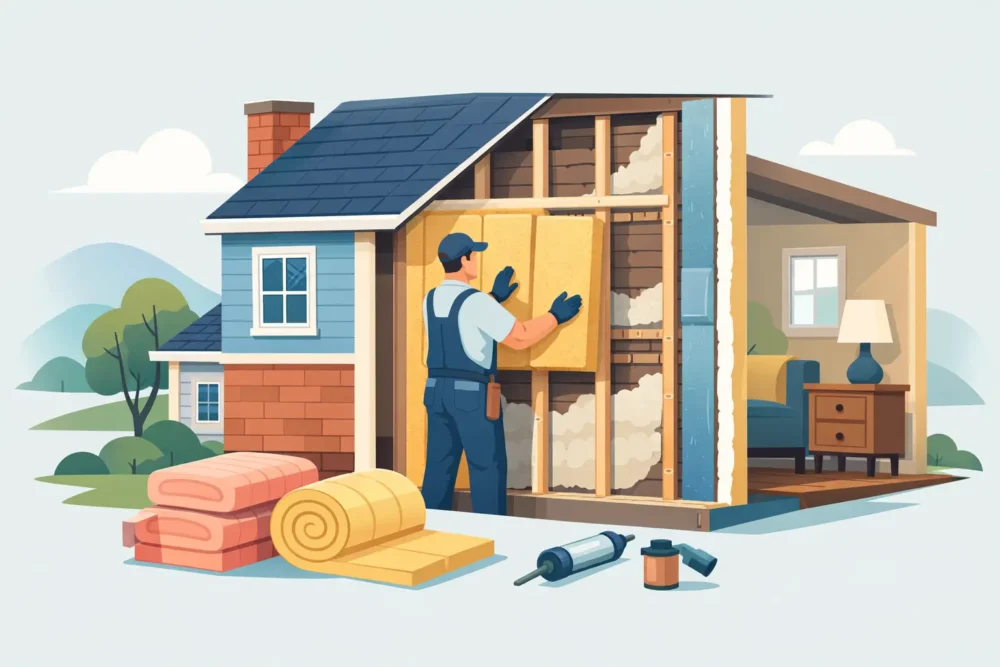
A room that stays cold even when the thermostat is set comfortably is rarely just a thermostat problem. In many older houses, heat is moving through underinsulated walls, outdoor air is entering through hidden gaps, or moisture has compromised materials inside the wall cavity. Wall insulation for older homes can make a meaningful difference, but the best solution depends on how the house was built and what is already happening behind the drywall or plaster.
Unlike a new build, an existing home cannot be treated as a blank slate. Older homes may have plaster walls, irregular framing, knob-and-tube wiring, historic finishes, brick veneer, or moisture concerns that need attention before insulation is added. A careful inspection helps protect the home while improving comfort and energy performance.
Why Older Home Walls Lose So Much Energy
Many homes built before modern energy codes have little to no insulation in exterior walls. Some have empty wall cavities. Others contain older materials that have settled, become damp, or no longer perform as intended. Even a wall with insulation can lose a surprising amount of heat or air conditioning through gaps around windows, electrical boxes, plumbing penetrations, and framing.
Homeowners often notice the results long before they see the cause. Bedrooms over garages may be hard to heat. Exterior-facing rooms may feel drafty. Walls can feel cold to the touch in winter or radiate heat in summer. High utility bills and HVAC systems that run constantly are also common signs.
In St. Louis-area homes, hot, humid summers and cold winters make these weaknesses especially noticeable. Effective wall work is not only about holding heat inside during winter. It also helps slow unwanted heat gain in summer, allowing the heating and cooling system to maintain a more consistent temperature.
Start With Inspection, Not an Insulation Product
The right material is only part of the decision. Before recommending wall insulation, a qualified contractor should identify the wall assembly, existing conditions, and sources of air or moisture movement.
Thermal imaging can help reveal cold spots, missing insulation, and air leaks without opening large areas of the wall. Small inspection openings may also be used to confirm whether cavities are empty, blocked by fire stops, filled with old insulation, or affected by moisture or pest activity. This step matters because adding insulation over a hidden problem can make that problem harder to find later.
For example, a wall stain or musty odor may point to a roof, window, plumbing, or exterior drainage issue. That moisture source should be corrected first. Insulation is designed to support a dry, well-managed building enclosure. It is not a repair for active water intrusion.
Older electrical systems deserve the same care. If a home has active knob-and-tube wiring, insulation should not be installed around it without evaluation by a licensed electrician. This wiring was designed to dissipate heat in open air, and covering it can create a safety concern.
Best Options for Wall Insulation for Older Homes
There is no single best insulation for every older house. The most appropriate option depends on wall construction, access, moisture conditions, local climate, budget, and the homeowner’s goals.
Dense-Pack Cellulose
Dense-pack cellulose is often a strong choice for enclosed wall cavities in older homes. Installers drill small access holes through siding, exterior sheathing, or interior finishes, then fill the cavity with treated cellulose at a density designed to limit settling.
This approach can add insulation without removing all the wall finishes. It is especially useful where homeowners want to preserve plaster, trim, or exterior character. Cellulose can also reduce air movement within a wall cavity, which supports better comfort.
Still, dense-pack installation requires experience. Cavities must be filled consistently, and the installer needs to work around obstructions such as blocking, wiring, and plumbing. If there is active moisture damage or a leaking exterior wall, that issue comes first.
Blown-In Fiberglass
Blown-in fiberglass can also be installed in enclosed walls through small access openings. It is moisture-resistant and lightweight, and it can be an effective solution when properly installed.
The trade-off is that fiberglass does not stop air movement on its own. Air sealing around windows, penetrations, attic transitions, and other openings remains essential. Without that work, a homeowner may add insulation yet continue to feel drafts and temperature swings.
Spray Foam for Targeted Areas
Spray foam can provide both insulation and air sealing, making it useful in select wall sections, additions, rim joists, and areas exposed during renovation. Closed-cell foam also has strong resistance to moisture vapor and can add structural rigidity in some applications.
That does not mean spray foam belongs in every older wall. Its cost is higher, and wall assemblies must be evaluated carefully so moisture is not trapped where it cannot dry. A professional should consider the exterior materials, wall thickness, and the home’s existing vapor control layers before using foam in an older structure.
Insulation During Remodeling
When drywall, plaster, or siding is already being removed for a renovation, homeowners have the widest range of choices. Open walls allow for detailed air sealing, repairs to wiring or plumbing, removal of damaged materials, and installation of insulation that fits the cavity correctly.
This is also the best time to address poorly sealed windows, missing exterior flashing, or pest pathways. The upfront scope may be larger, but combining these improvements while walls are open can prevent duplicate labor later.
Air Sealing Makes Wall Insulation Perform Better
Insulation slows heat transfer. Air sealing reduces the uncontrolled movement of outdoor air into and conditioned air out of the house. The two work together, and treating only one can limit the results.
In older homes, some of the most significant leaks are not located in the middle of the wall. They occur where walls meet the attic, foundation, windows, doors, and utility penetrations. A draft near an exterior outlet may actually be connected to a larger pathway above or below the wall.
That is why a whole-home approach can be more effective than treating one symptom. Attic air sealing and insulation, crawl space insulation or vapor barriers, wall insulation, and ventilation improvements each address different parts of the same home-performance system. When the system is evaluated together, recommendations can be based on the actual causes of discomfort rather than assumptions.
Moisture, Ventilation, and the Risks of Getting It Wrong
Older homes need to manage moisture as well as heat. Brick walls, wood siding, plaster, and older framing assemblies can behave differently than modern construction. If insulation changes how a wall dries, an existing moisture issue may become more serious.
Warning signs include peeling paint, soft wood, recurring stains, mold-like odors, condensation on windows, or insulation that is wet, compressed, or contaminated. Rodent activity can also damage insulation and leave behind waste that affects indoor air quality. In these cases, removal, sanitizing, rodent proofing, and repair may be appropriate before new material is installed.
Ventilation is part of the conversation, too. A home should not be made tighter without considering how bathrooms, kitchens, attics, and crawl spaces are ventilated. The goal is controlled airflow: less random leakage through the building envelope and proper exhaust where moisture is created.
What Results Should Homeowners Expect?
Properly planned wall insulation can improve comfort quickly, especially in rooms with exterior walls that were previously uninsulated. Homeowners may notice fewer drafts, more even temperatures, quieter rooms, and less demand on heating and cooling equipment.
Energy savings vary. The size of the home, fuel costs, attic insulation levels, HVAC condition, window performance, and air leakage all affect the outcome. A house with major attic bypasses or crawl space moisture problems may not see its full potential from wall insulation alone. That is not a reason to avoid wall work. It is a reason to prioritize improvements based on inspection findings.
A clear estimate should explain the recommended material, access method, areas being treated, repair needs, and any work that should happen first. Homeowners should also ask how the contractor will protect finishes, manage dust, verify coverage, and handle old or contaminated insulation if it is discovered.
Better Home Insulation approaches these projects with inspection-led recommendations, licensed and insured service, and solutions that account for the full home envelope. The objective is not simply to put material inside a wall. It is to help create a cleaner, more comfortable home that costs less to heat and cool.
If one or two rooms have never felt right, treat that discomfort as useful information. A professional inspection can show whether the answer is wall insulation, air sealing, moisture correction, or a combination that gives your older home the lasting improvement it deserves.