
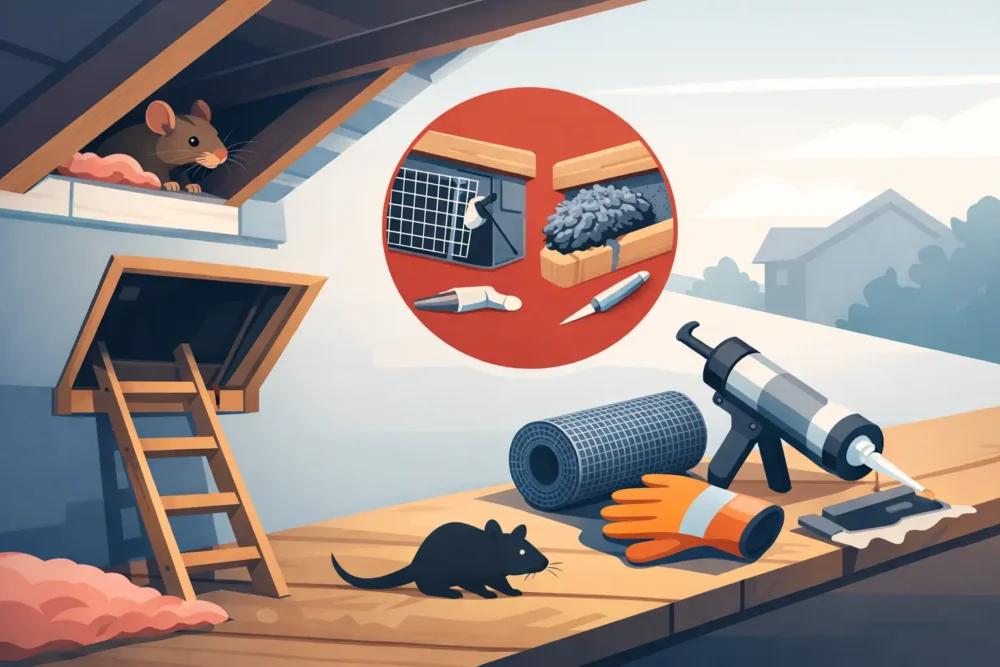
A faint scratching sound above the ceiling, droppings near a pull-down ladder, or insulation that looks tunneled through can point to one frustrating problem: rodents have found a route into the attic. This guide to rodent proofing attic access points explains how to identify the openings that matter, close them correctly, and protect the insulation and indoor air quality your family depends on.
Rodent proofing is not simply a matter of placing traps in the attic. Mice and rats can enter through remarkably small gaps, travel through wall cavities, and use an unsealed attic hatch or utility penetration as part of a larger pathway. Lasting results come from identifying the full route, removing active activity safely, and sealing entry points with materials rodents cannot easily chew through.
Why attic access points deserve attention
Your attic is more than storage space. It is part of the home’s thermal and air barrier system. When rodents enter, they can compress or contaminate insulation, chew wiring, damage ductwork, and leave urine and droppings behind. They may also enlarge existing gaps around pipes, wiring, soffits, or framing.
Many of the same openings that allow rodents in also allow conditioned air out. That means a pest issue can become a comfort and energy-cost issue. In a St. Louis-area home with a hot, humid summer or a cold winter, air leaks around attic access points can contribute to uneven temperatures, drafts, and higher heating and cooling bills.
The goal is to make the attic harder to enter without creating moisture or ventilation problems. That distinction matters. Attic ventilation openings need to remain functional, but they may need properly sized, durable screening. An attic hatch needs to open for maintenance, but it should close tightly enough to limit both air leakage and pest access.
Start with a careful inspection
Before sealing anything, look for evidence of current or past activity. Fresh droppings, greasy rub marks, shredded paper or insulation, gnawed wood, and a persistent musky odor all deserve attention. Listen for sounds at night, when rodents are most active, and inspect the exterior around the roofline as well as the attic interior.
A flashlight, gloves, and a camera can help document conditions, but use caution. Attics often have exposed nails, unstable walking surfaces, electrical hazards, and contaminated insulation. Avoid stepping between ceiling joists or disturbing large amounts of rodent waste. If you see extensive contamination, damaged wiring, or an active nest, professional evaluation is the safer choice.
Check the attic hatch or pull-down stairs
A standard ceiling hatch is often one of the weakest points in the attic boundary. Look for a warped cover, cracked trim, missing weatherstripping, or gaps along the edge. Pull-down stair assemblies can have even more leakage because they contain several seams and may not sit squarely in the framing.
The hatch itself usually is not where rodents first enter the home from outdoors. However, it can allow rodents already traveling through wall cavities or attached garage areas to reach the attic. It also allows attic dust, odors, and airborne contaminants to move into the living space when the seal is poor.
Inspect penetrations and framing gaps
Look closely where plumbing stacks, electrical cables, HVAC lines, recessed fixtures, chimneys, and vents pass through the attic floor or roof structure. Gaps around these penetrations are common. So are open framing cavities, holes left from old wiring or pipes, and separation around duct chases.
From outside, inspect roof-to-wall intersections, soffits, fascia areas, gable vents, roof vents, attic fan housings, and gaps near utility lines. A mouse can fit through an opening around 1/4 inch wide. Rats need more space, but they are persistent chewers and can exploit weak materials.
How to rodent proof attic access points effectively
The best repair method depends on the location and purpose of the opening. A gap that must stay open for ventilation needs a different solution than an unused hole around an old pipe. What should not change is the material standard: avoid relying on expanding foam, wood filler, or plastic alone in locations rodents can reach. These materials can help with air sealing, but rodents may chew through them when they are unprotected.
For permanent exterior exclusion, durable metal flashing, hardware cloth, or corrosion-resistant metal mesh are often appropriate. Mesh opening size should be small enough to stop mice, and it should be fastened securely rather than loosely placed over an opening. Larger damaged areas may require repair of the surrounding wood, siding, soffit, or framing before screening can be installed correctly.
For interior gaps around pipes and wiring, a combination of metal material and a compatible sealant can provide both chew resistance and air sealing. The correct approach depends on whether the penetration is near a heat source, chimney, electrical component, or combustible material. Clearance and fire-safety requirements must be respected.
Seal the attic hatch without making it difficult to use
An attic hatch should rest on a solid, even surface and have weatherstripping around its perimeter. Rigid foam insulation can be added to the attic side of the cover if the hatch is uninsulated, provided it does not interfere with a secure fit. A latch or positive closure can help eliminate a loose edge.
Pull-down stairs may need a purpose-built insulated cover installed above the stair opening. This creates a second barrier against air leakage and helps keep attic contaminants out of the house. If the stairs are warped, damaged, or poorly framed, replacing or reframing the assembly may be more effective than adding weatherstripping to a failing unit.
Protect vents while preserving airflow
Never block roof, soffit, or gable ventilation just to keep rodents out. A poorly ventilated attic can trap moisture and contribute to mold, wood deterioration, and insulation problems. Instead, repair damaged vent covers and use rodent-resistant screening that allows intended airflow.
This is one area where a quick DIY fix can cause unintended consequences. For example, stuffing insulation into a soffit or covering a roof vent with the wrong material may stop airflow without solving the actual entry point. A proper inspection separates required ventilation from gaps that should be sealed.
Do not seal active rodents inside
Timing matters. If rodents are currently using an opening, sealing it immediately can trap animals in the attic or wall cavities. They may die inside, create odor problems, or chew a new exit through a weaker area. In some cases, a one-way exclusion device is used to let animals leave while preventing re-entry, followed by permanent sealing after activity has stopped.
The right method depends on the animal, the season, and whether young may be present. Rodent control should also account for state and local requirements, especially when an inspection reveals animals that are not rodents. If there is any uncertainty about the species or the extent of activity, it is wise to bring in a trained professional.
Clean and restore the attic after exclusion
Closing entry points is only part of the job. Rodent-contaminated insulation may no longer perform as intended, and it can hold odors and allergens. Spot cleaning may be suitable for a limited issue, while heavy contamination often calls for insulation removal, controlled cleanup, sanitizing, and replacement insulation.
This is also an ideal time to address attic air leaks and insulation depth. Sealing the attic floor around penetrations before installing new insulation can improve comfort and reduce the chance that conditioned air carries odors from the attic into bedrooms and living areas. Thermal imaging and a detailed attic inspection can help identify hidden problem areas that are not obvious from a quick visual check.
When professional rodent proofing is the better investment
A homeowner can often replace worn hatch weatherstripping or identify obvious damage. Professional service becomes especially valuable when the attic has widespread droppings, chewed electrical wiring, damaged ducts, contaminated insulation, inaccessible entry points, or recurring infestations.
A complete approach should address exclusion, cleanup, air sealing, and insulation restoration as needed. Better Home Insulation helps homeowners evaluate these connected issues so the work supports a cleaner attic, more dependable comfort, and better energy performance rather than treating one visible symptom.
If you suspect rodents have access to your attic, act before a small opening turns into damaged insulation, lingering odors, or a larger repair. A thorough inspection and a carefully planned repair can restore the quiet, clean, well-protected attic your home needs.