
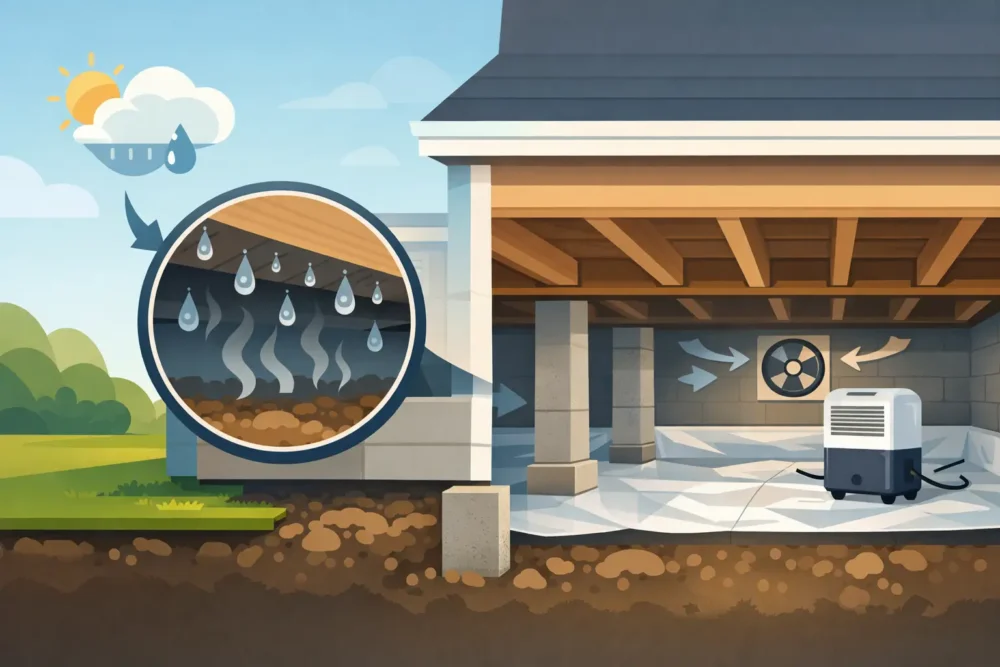
A damp, musty crawl space is not just an unpleasant surprise during a home inspection. Moisture under your floors can soak insulation, encourage mold growth, attract pests, and make rooms above feel colder in winter and harder to cool in summer. Knowing how to stop crawl space condensation starts with understanding that the water droplets are usually a symptom, not the root problem.
Condensation occurs when warm, humid air touches a cooler surface, such as foundation walls, ductwork, pipes, or the underside of your subfloor. In the St. Louis area, humid summer weather, heavy rain, and seasonal temperature swings can create the right conditions quickly. The lasting solution is to control where moisture comes from, how air moves through the crawl space, and whether the space is properly protected.
Why Crawl Space Condensation Happens
Your crawl space may be humid because outside air is entering through foundation vents, gaps, or an unsealed access door. When that humid air meets cool surfaces below the home, it can release moisture as condensation. This is especially common in summer, when outdoor humidity is high but the crawl space remains comparatively cool.
Moisture can also rise directly from exposed soil. Even if the ground looks dry, water vapor naturally moves upward through dirt. Without a quality vapor barrier, that vapor becomes part of the crawl space air and can collect on wood framing, insulation, and HVAC equipment.
Water management outside the home matters just as much. Poor grading, clogged gutters, short downspouts, plumbing leaks, or groundwater can introduce liquid water into the crawl space. A vapor barrier cannot correct standing water or a foundation drainage problem. Those issues need to be addressed before insulation or encapsulation work begins.
How to Stop Crawl Space Condensation at Its Source
The right approach depends on the crawl space design and the source of moisture. Some homes benefit from carefully managed ventilation. Many humid-climate homes perform better with a sealed, conditioned crawl space. A professional inspection can identify which approach fits your structure instead of applying the same fix to every home.
Start with drainage and bulk water
Look for signs that rainwater is reaching the foundation: puddles near the exterior walls, wet soil after a storm, overflowing gutters, or downspouts that discharge beside the house. The soil around the foundation should slope away from the home so surface water moves outward rather than pooling against the crawl space wall.
Extend downspouts far enough to carry roof runoff away from the foundation. Repair damaged gutters and correct any low spots that hold water. If water enters through the foundation or rises from below, a drainage system, sump pump, or other water-control measure may be needed. These repairs come before vapor barrier installation because trapping water beneath a liner is not a solution.
Inside the crawl space, check visible pipes for leaks and pay attention to wet areas near bathrooms, kitchens, laundry rooms, and HVAC condensate lines. Even a small ongoing leak can keep the space humid enough to cause condensation.
Cover exposed soil with a vapor barrier
A crawl space vapor barrier reduces the amount of ground moisture entering the air. Thin plastic sheeting can help temporarily, but it tears easily and often leaves gaps around posts, edges, and seams. For a durable result, use a heavy-duty liner installed continuously across the crawl space floor, with seams overlapped and sealed.
The liner should extend up foundation walls where appropriate and be properly secured. Details matter. Open seams, unsealed edges, or holes around piers give moisture a path back into the space. If the crawl space will be sealed or encapsulated, the vapor barrier becomes a central part of the system rather than a simple layer of plastic on the ground.
A vapor barrier also protects crawl space insulation from moisture exposure. Fiberglass insulation that gets wet or sags between floor joists loses effectiveness and may need removal and replacement. Addressing the moisture first prevents new insulation from being damaged by the same conditions.
Seal outside air leaks and the access door
In a humid Missouri summer, venting a crawl space can bring in more moisture than it removes. Foundation vents, gaps around plumbing and wiring penetrations, cracks at rim joists, and poorly fitted access doors all allow humid outside air to enter.
Sealing those openings reduces uncontrolled air movement. The crawl space access door should close tightly and be weather-resistant. Openings around pipes, ducts, and cables should be sealed with materials suited to the location and surface. The goal is not simply to make the crawl space airtight without a plan. It is to stop humid outdoor air from mixing with cool crawl space surfaces while providing an appropriate moisture-control strategy.
If your home has a vented crawl space, do not close all vents on your own without evaluating drainage, insulation, combustion appliances, and local building requirements. A sealed crawl space needs a deliberate design, including moisture control and, in many cases, conditioned air or mechanical dehumidification.
Insulate the right surfaces
Crawl space insulation can improve comfort, but the placement needs to match the crawl space strategy. In a traditional vented crawl space, insulation is often installed beneath the floor above. In a sealed or encapsulated crawl space, insulating the foundation walls can be more effective because it brings the crawl space closer to the home’s conditioned envelope.
The wrong insulation in a damp crawl space can create more problems. Fiberglass batts exposed to humid air may absorb moisture, sag, and become a nesting material for rodents. Rigid foam or closed-cell spray foam can be appropriate in some applications because they resist moisture better, but they must be selected and installed with fire-safety requirements and local code considerations in mind.
An inspection should also check the rim joist area. This common air-leak location can allow warm, humid air into the crawl space and create cold floors above. Air sealing and insulating the rim joists can improve both moisture control and energy efficiency.
Control humidity with conditioned air or a dehumidifier
After water entry, ground vapor, and air leaks are controlled, the remaining crawl space humidity may need mechanical help. A crawl space dehumidifier removes moisture from the air and should drain continuously to an approved location. Emptying a small portable unit by hand is rarely practical for a large or persistently damp crawl space.
In some sealed crawl spaces, a small supply of conditioned air from the home’s HVAC system may be used as part of the design. This can work well when the system is correctly sized and the crawl space is properly sealed. It should not be treated as a shortcut for drainage repairs or a missing vapor barrier.
A humidity monitor gives you a useful way to verify results. Aim to keep relative humidity below 60%, with many homes performing best in the 45% to 55% range. Consistently higher readings, visible water droplets, damp insulation, or musty odors mean the moisture source is still active.
Signs You Need More Than a DIY Fix
Homeowners can often improve gutter drainage, extend downspouts, and look for obvious plumbing leaks. But crawl spaces can conceal structural moisture damage, contaminated insulation, rodent activity, and electrical or HVAC concerns. If you see mold-like growth, standing water, rotten wood, sagging insulation, wet ductwork, or recurring condensation after making basic corrections, it is time for a more complete evaluation.
A professional crawl space inspection should identify the moisture pathway before recommending work. That may include checking exterior drainage, evaluating vapor barrier coverage, finding air leaks, assessing insulation condition, and looking for pest-related damage. Thermal imaging and moisture diagnostics can help locate hidden problem areas that are not obvious from the crawl space entrance.
Better Home Insulation helps homeowners in St. Louis and surrounding communities address crawl space moisture as a full home-performance issue. That can include removing damaged insulation, installing a properly sealed vapor barrier, improving insulation and air sealing, and addressing sanitation or rodent concerns when needed. Licensed and insured technicians can explain the findings clearly and provide a customized estimate based on your home, not a one-size-fits-all package.
A dry crawl space protects more than the area beneath your home. It helps preserve framing, supports healthier indoor air, protects insulation performance, and makes the rooms above more comfortable. If the musty smell or moisture keeps returning, treat it as an opportunity to find the cause and correct it for the long term.